
Egypt’s Ambitious Agricultural Goals for 2024
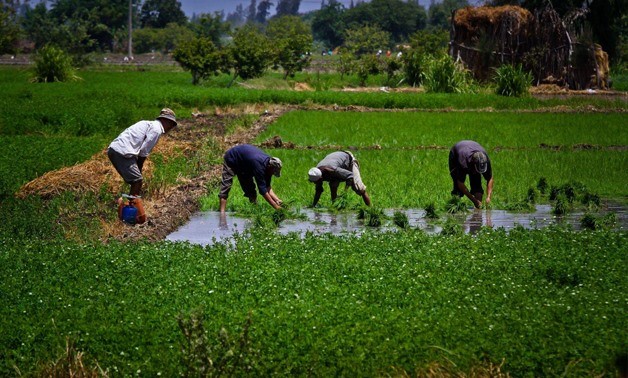
CAIRO, 22 June 2021 – Egypt is setting its sights on a substantial boost in agricultural production by 30% in 2024, with a parallel aim to elevate the agriculture sector’s contribution to the gross domestic product (GDP) to 12%. Minister of Planning and Economic Development, Hala El-Said, unveiled these objectives as part of a strategic plan to expand the agricultural sector’s role and impact.
El-Said emphasized that these measures will have a cascading effect, generating employment opportunities within the sector, augmenting income for small-scale farmers, and driving exports.
This comprehensive strategy entails a doubling of the sector’s share in exports, from 17% in 2020 to an ambitious 25% by 2024, as outlined by El-Said during her participation in a high-level dialogue on food security in the Middle East and North Africa (MENA) region. The World Bank-hosted dialogue, titled “Food Security in the wake of the COVID-19 crisis: Pathways from crisis to recovery,” was held through a video conference.
This event was a part of the larger series of discussions organized for the Spring Meetings of the World Bank and the International Monetary Fund (IMF). El-Said leveraged the platform to discuss future reforms and investments in Egypt’s food system, underscoring the resilience of the country’s food sector in navigating the challenges posed by the COVID-19 pandemic.
Amid the pandemic, Egypt managed to ensure food security across all economic strata without experiencing shortages in strategic crops. This was realized through a comprehensive approach, including financial and monetary measures such as a LE 100 billion stimulus package amounting to 1.8% of GDP. Additionally, initiatives by the Central Bank of Egypt (CBE) extended support to the agricultural sector through preferential lending rates.
El-Said noted that Egypt’s agro-food sector encompasses not only agriculture and food processing but also related inputs and trade. This sector constitutes approximately 24.5% of the GDP and contributes to 23.2% of labor’s added value in Egypt.
The minister stressed that Egypt possesses a highly appealing environment for investment in agriculture and food production. With favorable soil quality, climate conditions, strategic geographical location, and active participation in trade agreements, Egypt presents promising prospects.
El-Said highlighted that the structural reform program initiated by the Egyptian Government in 2016 focused on enhancing the productive capacity and competitiveness of the real economy. Key areas of emphasis included industry, information and communication technology (ICT), and agriculture. The program also addressed critical aspects related to food security, environmental sustainability, and managing population growth and water scarcity.
In terms of water management, El-Said disclosed the government’s commitment to increasing water resources through strategies such as desalination, modernizing irrigation techniques to conserve water consumption, and investing in water infrastructure renewal.
The government also embarked on a project for land reclamation and cultivation of 1.5 million feddans, a step toward enhancing food security. Furthermore, the “Decent Life” initiative, a substantial social protection program, focuses on rehabilitating rural areas through extensive investments.
El-Said’s review of the green economy unveiled Egypt’s issuance of green bonds worth $750 million for a five-year period, marking the MENA region’s first government-initiated sale of these bonds. Egypt’s trajectory aligns with the global trend, with projections for a substantial rise in the global green debt market.
Climate change and water scarcity emerged as two critical challenges alongside the ongoing COVID-19 pandemic. El-Said emphasized the pivotal role of the private sector in fortifying food systems. She also noted that The Sovereign Fund of Egypt (TSFE) serves as a key instrument to bolster the private sector’s role in this endeavor.
The conference witnessed participation from a range of global and regional leaders, including representatives from the World Bank Group, ministers from various MENA countries, and experts in the field of food security and development.
